

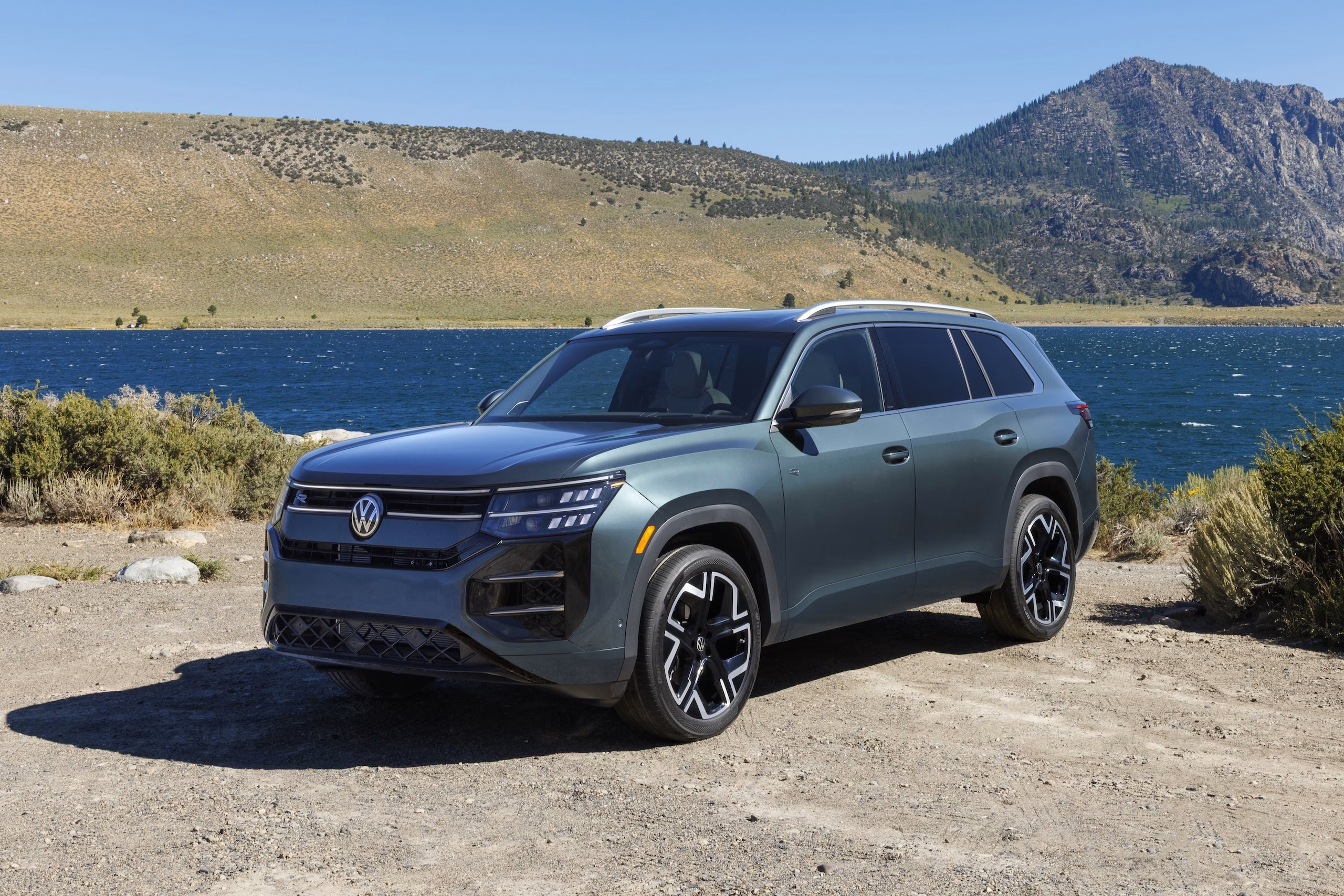


Volkswagen’s three-row Atlas continues to make its case with impressive space, smart technology, strong safety features and road manners that feel distinctly European.
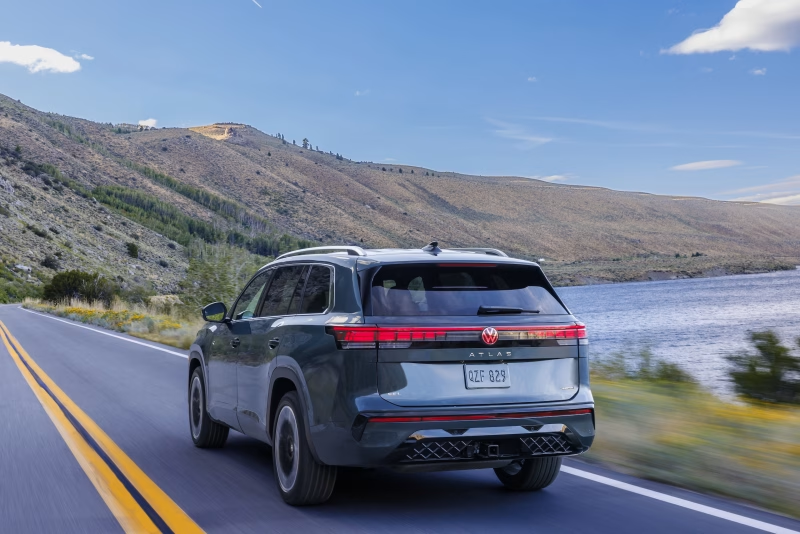
The three-row SUV is pretty much the new American family car, and that means it has one of the toughest assignments in the automotive space.
It needs enough room for seven passengers, enough cargo capacity for a family vacation, technology that keeps everyone connected and safety systems sophisticated enough to provide another set of electronic eyes on increasingly crowded roads. It also needs to be comfortable, reasonably efficient and enjoyable enough to drive that the person behind the wheel doesn’t feel like the family chauffeur.
The second-generation 2027 Volkswagen Atlas checks those boxes while retaining something increasingly difficult to find in this segment: personality.
Volkswagen has steadily moved the Atlas upscale, incorporating better technology, more sophisticated driver-assistance features and a premium interior.
The result is an SUV that makes a convincing argument against spending considerably more money simply for a luxury badge.
A More Premium Volkswagen
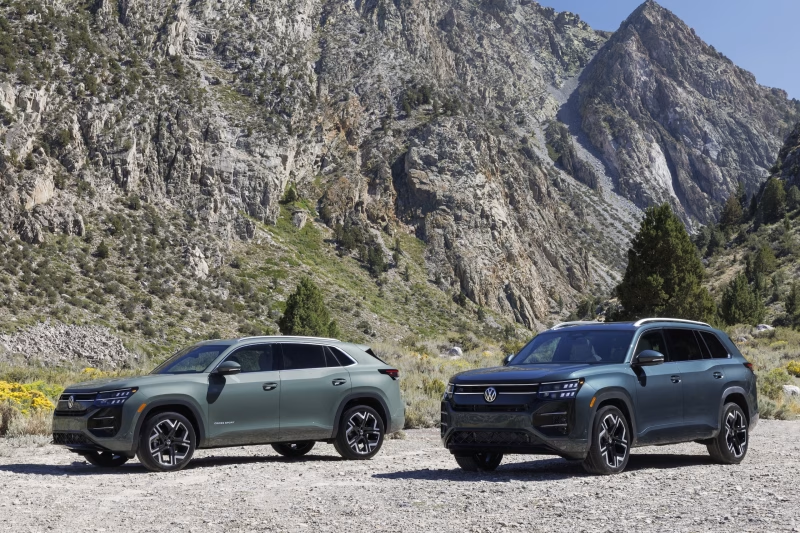
One of the most interesting aspects of the new Atlas is how upscale it feels. If the body didn’t have VW logos, you could easily imagine that you just entered a luxe SUV from big brother Audi; which raises the question: How much does the badge matter?
Move through the lineup and features such as upgraded seating, enhanced climate functions, premium audio, additional driver assistance and more sophisticated interior materials define the character of the vehicle.
For buyers comparing a loaded mainstream SUV against the lower end of the luxury market, the Atlas makes a compelling argument with technology and comfort features buyers associate with premium vehicles.
On the Road in Rocket City

On the winding and hilly roads surrounding Huntsville, Alabama—America’s “Rocket City”—the 2027 Atlas proved impressive.
Volkswagen has simplified the Atlas powertrain equation around its turbocharged 2.0-liter four-cylinder engine, paired with an eight-speed automatic transmission.
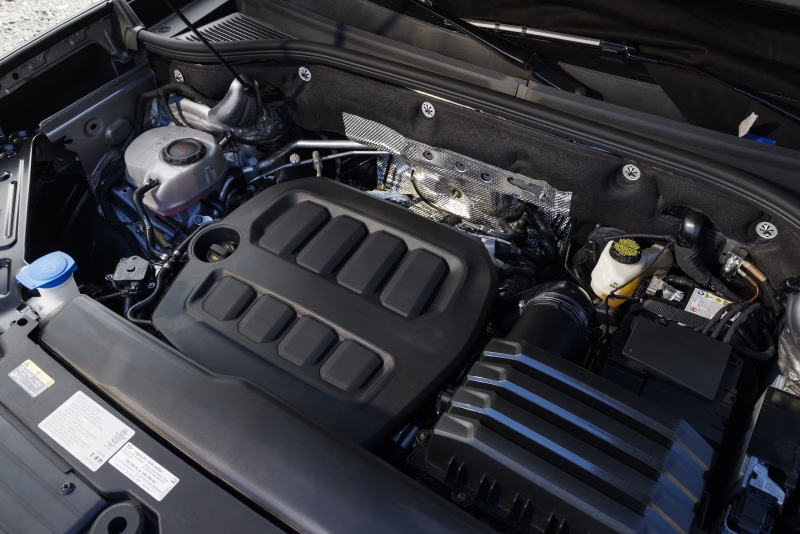
Performance from the 2.0-liter turbo engine was good, and available 4MOTION all-wheel drive adds considerable traction when dealing with rain, snow and changing road surfaces.
At 6-foot-9, I found myself a bit cramped in the driver’s seat. But comfort for my Sasquatchian stature is something no automaker can reasonably be expected to engineer into every vehicle.
For normally proportioned humans, the Atlas offers a spacious and comfortable driving environment.
More important for nearly everyone are the sight lines, as visibility front and rear is excellent. That’s particularly welcome at a time when thick pillars, small rear windows and dramatic rooflines have made some SUVs downright dangerous with poor sightlines.
Atlas Convenience Tech
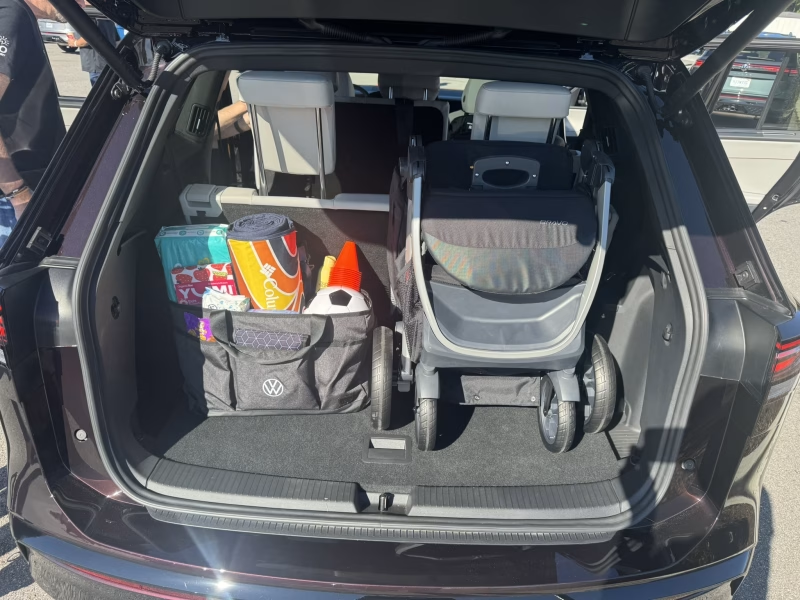
Atlas’ large doors make getting passengers into and out of the vehicle relatively easy. The three-row configuration provides flexibility, while generous cargo capacity means the Atlas can transition quickly from people carrier to luggage hauler.
Ever thought today’s new vehicles are overly complicated to operate? I do all of the time with certain brands. This hi-tech presents manufacturers with an interesting challenge, as it’s becoming clear that buyers want more technology but don’t necessarily want more complexity.
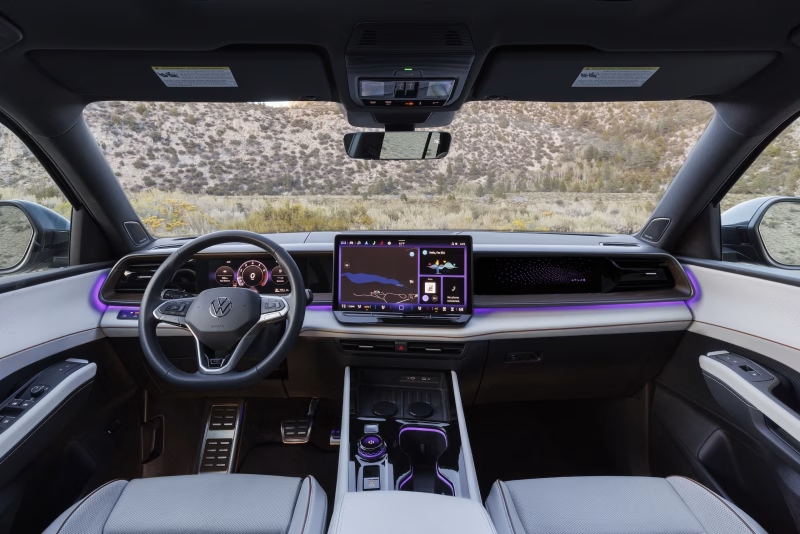
Volkswagen has attempted to strike that balance with an easy to operate large central infotainment interface complemented by a configurable digital instrument display and Standard IQ.DRIVE driver assistance features.
Smartphone connectivity puts familiar apps, music, messaging and navigation within easy reach, and the digital cockpit is easy to read and provides selectable information.
Depending on trim, Atlas offers standard real wood décor and multi-color ambient lighting, and available 15-inch display, Nappa leather, and front-seat massage. More family-friendly features are standard, including power tailgate, rear sunshades, and dual wireless charging.
Atlas Safety
VW has always been known for exceptional safety features, and the 2027 Atlas offers a broad collection of driver-assistance systems designed to help monitor what’s happening around the vehicle.
Depending on trim and configuration, technologies include forward-collision monitoring and emergency braking, blind-spot monitoring, rear traffic alerts, lane assistance and adaptive cruise-control functions. A new front center airbag across all trims is a great safety feature, as it provides an air cushion between driver and front passenger during impact.

During a demo, Volkswagen outfitted an Atlas with five child safety seats. And the vehicle still had enough room in the hatch area for cargo. Impressive.
2027 Atlas Trims
Volkswagen offers enough variety to tailor the Atlas without making the buying process unnecessarily complicated.
The Atlas SE is the value choice, delivering technology and safety advantages without feeling stripped down. Prices begin at $41,610.
The SE with Technology is the lineup’s sweet spot, adding desirable convenience equipment without pushing too far up the price ladder. Prices begin at $45,610.
The SEL moves the Atlas noticeably upscale with additional comfort, technology and driver-assistance features.
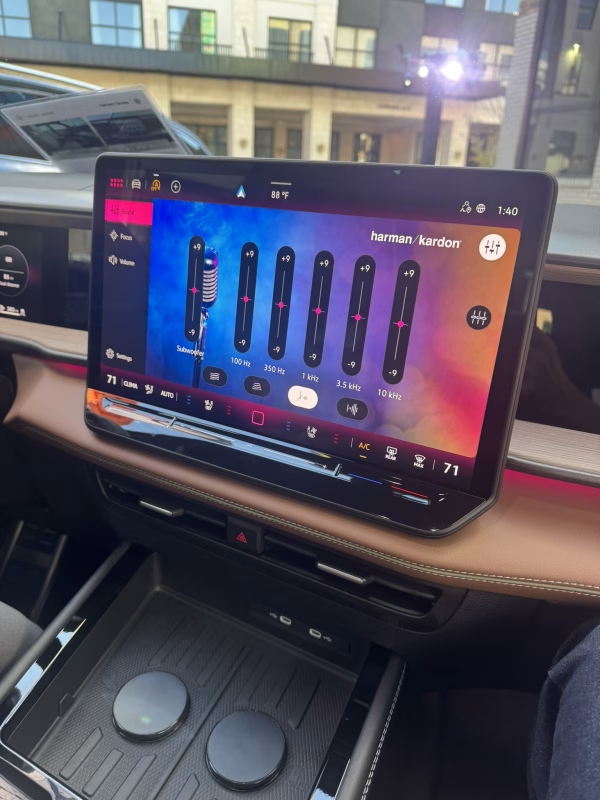
And the SEL Premium R-Line sits at the top, combining the most luxurious Atlas interior with distinctive R-Line styling and the fullest complement of equipment, including a killer 14 speaker Harman Kardon premium audio system.
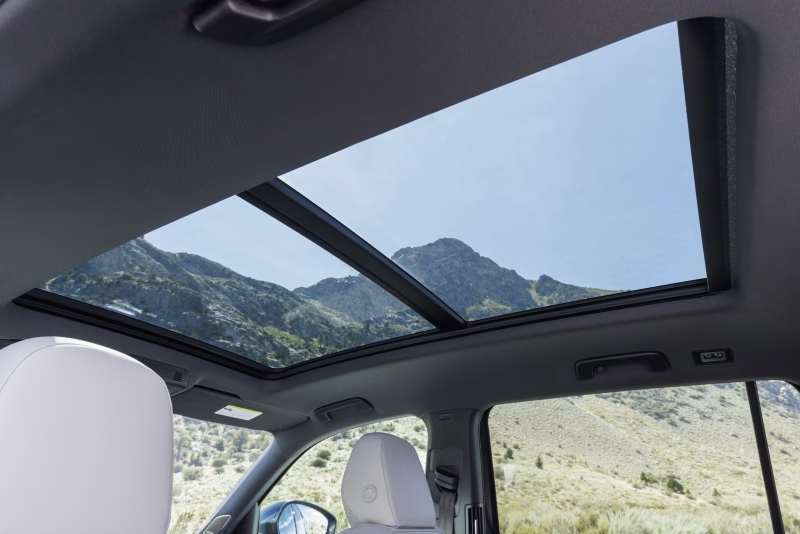
A Panoramic Sunroof ($1,200), Captain’s Chairs ($695), and Black Wheel Package ($595) are available option on all trims except SE.
Seven gorgeous paint options are available, with Mountain Lake Blue and Blackberry my personal favorites.
Choosing the Right Atlas
The Atlas lineup is broad enough that buyers can focus on priorities rather than equipment lists.
If value is the main concern, the SE provides a strong foundation without feeling basic. If convenience is more important, the SE with Technology is likely the most rational choice.
The SEL is the trim to consider when comfort, technology, and a more upscale atmosphere matter most. And the SEL Premium R-Line is for those who want the fullest expression of what the Atlas can offer.
That variety is one of Atlas’s greatest strengths, as Volkswagen has created a lineup that recognizes how differently families use their vehicles.
The Pursuitist Verdict
The 2027 Volkswagen Atlas isn’t trying to be the fastest, most luxurious or most rugged three-row SUV in America.
Instead, Volkswagen has concentrated on the things that matter every day: space, comfort, visibility, technology, safety and confident road manners.
Its turbocharged engine provides good performance. The chassis delivers an impressive balance between comfort and control. The cabin gives families the flexibility expected from a true three-row SUV, while the technology and driver-assistance systems add meaningful convenience and reassurance.
And Volkswagen offers enough variation within the lineup for buyers to choose their priorities without changing the fundamental character of the vehicle.
The 2027 Volkswagen Atlas is a family SUV designed around the realities of actually having a family—and Volkswagen has managed to make that practicality enjoyable to drive.
Atlas pricing begins $41,610 (SE) and rises to $56,610 (SEL Premium R-Line).
