

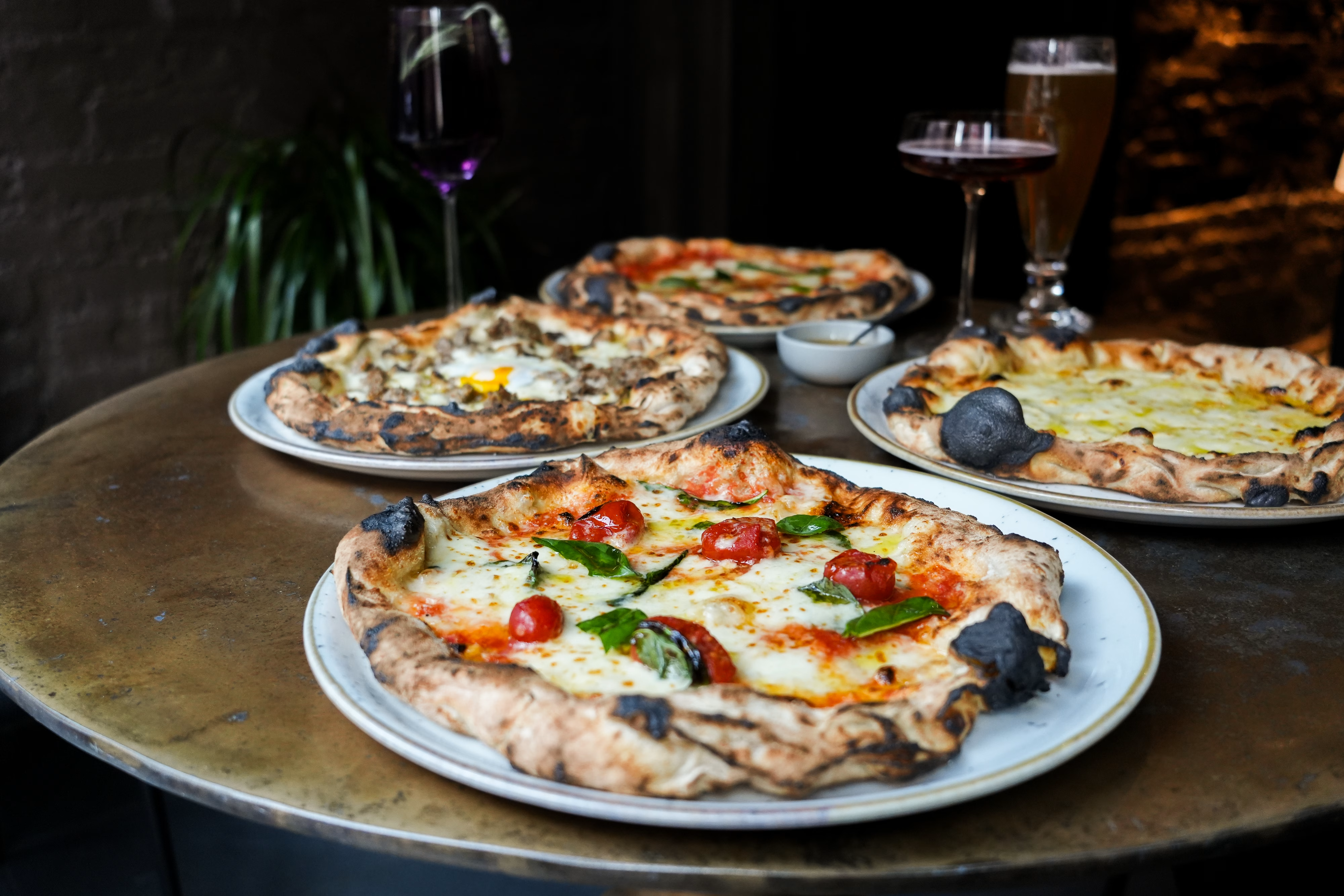


Chef Tsubasa Tamaki never set out to follow the rules. He’s bringing that style to New York with Pizza Studio Tamaki (PST). Here, he talks about Naples, falling for New York slices, and what he hopes guests miss when they eat pizza anywhere else.
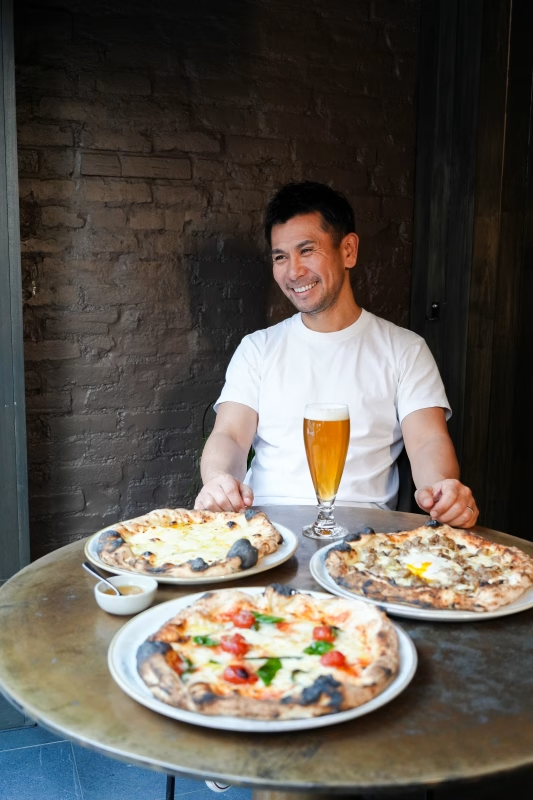
Pursuitist: You grew up in Okinawa and taught yourself to make pizza. What first drew you to it?
Chef Tsubasa Tamaki: I’ve always been good at making things with my hands, and working with pizza dough felt a lot like playing with clay. I genuinely enjoyed it. Also, when I moved to Tokyo, I was living on very little money. I was constantly looking for a job that would allow me to earn a living while doing something I enjoyed.
Whats the first pizza you remember eating, and what did it teach you?
The first pizza I remember was a terrible one I ate at Kadena Air Base in Okinawa during their annual Independence Day celebration. As a child, I used to experiment with making pizza toast, changing the toppings and flavors however I liked. I remember thinking, “Surely I can make something better than this!” That’s when I discovered how much freedom there was in creating different pizza flavors.
You tested more than 700 flour combinations over about a year and a half. What kept you going, and what did you learn along the way?
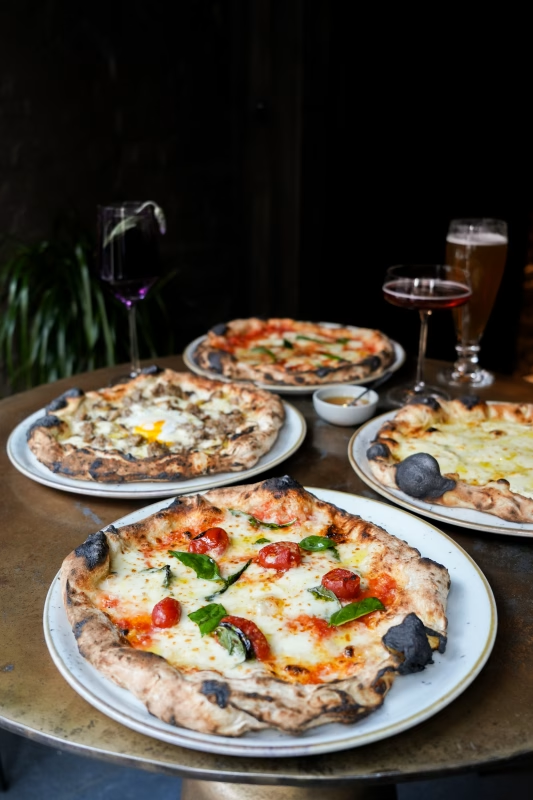
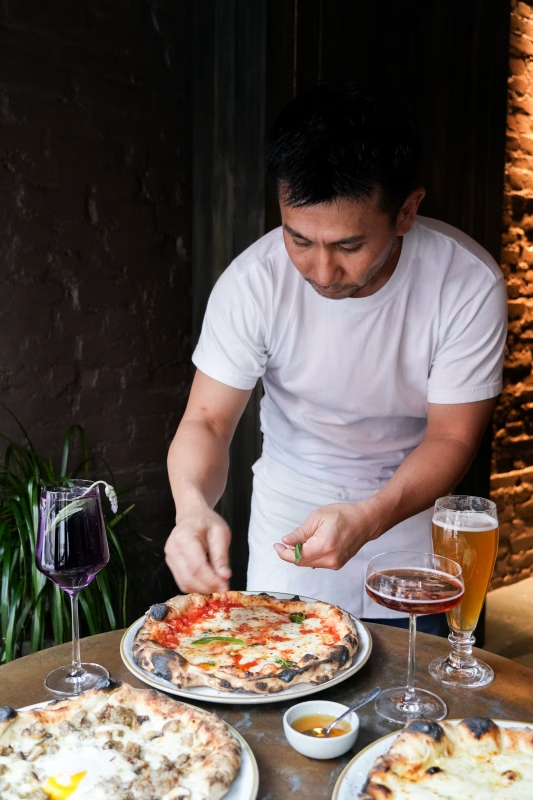
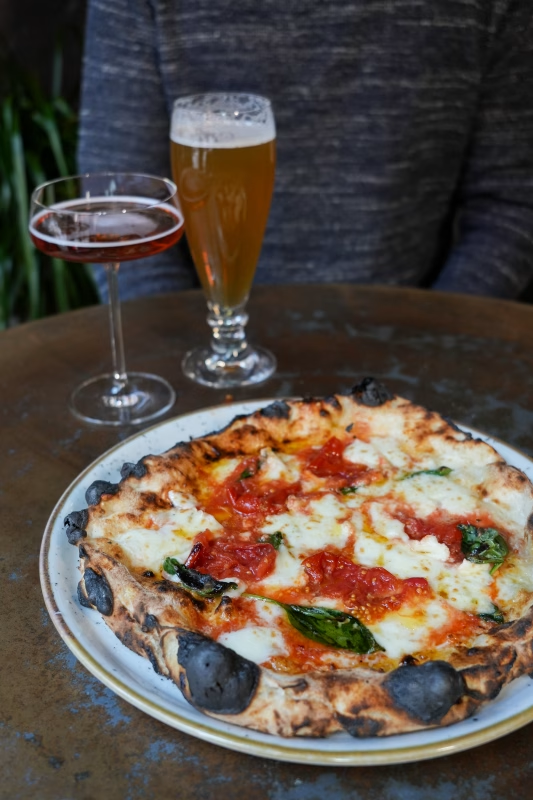
I had a huge dream of opening a restaurant in New York. I knew that unless I could create a pizza that was lighter and more impactful than anything else out there, it would simply get lost among all the others. I felt that my pizza had to be truly one of a kind. I wanted to create a crust that puffed up like a cloud, with a light, fragrant texture and a flavor reminiscent of Japanese salted rice crackers. Through countless rounds of trial and error, while continuing to serve customers every day, I gradually developed a better understanding of the flavors people were looking for.
How do you define “Tokyo-style” Neapolitan? What do you keep from Naples, and what do you change?
As I mentioned in the previous answer, I believe the style of pizza now referred to as Tokyo-style actually originated with me about 20 years ago, while I was training at SAVOY. It came about because I broke the rules. To begin with, I never particularly liked the taste of traditional Neapolitan pizza. So I don’t really see my pizza as inheriting or preserving any of those traditions. Perhaps the only thing we have in common is that we bake pizza in an oven.
What’s a flavor or ingredient you are currently obsessed with and can’t stop putting on menus?
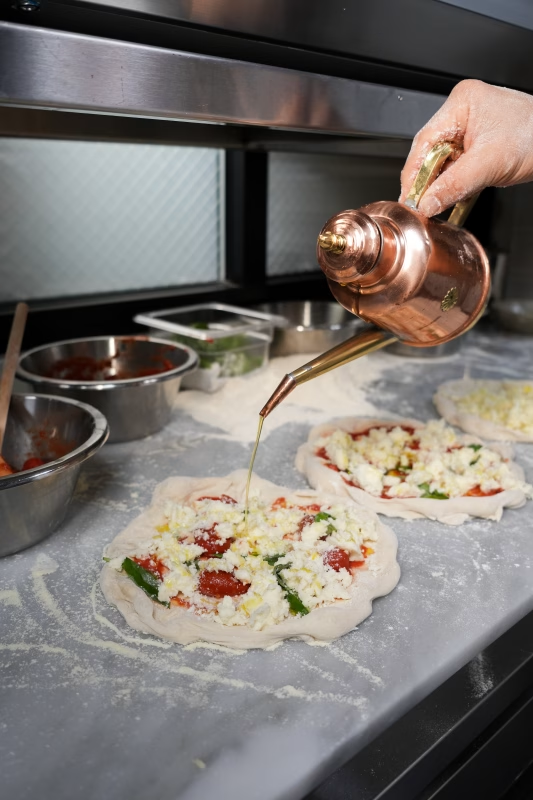
New York-style pizza by the slice. I visited Ceres in Chinatown and was blown away. More than the toppings, it was the texture that amazed me. Now I’m experimenting with different ideas to bring flavors and tastes that you can normally only experience in Japan to this style of slice pizza.
What has surprised you about New York diners compared with Tokyo?
I feel like New Yorkers experience my pizza as an entirely different category. They don’t react negatively to the saltiness or charred parts of the crust. Instead, they seem to enjoy those qualities, and that makes me happy. In our Asian locations, some customers comment that the pizza looks burnt or that the salt might be unhealthy. Food cultures and people’s tastes naturally differ from country to country, so we adapt our recipes to suit each market.
What culinary destinations are on your bucket list?
Greece and Mexico. I want to eat Greek yogurt and Greek chocolate in Greece, and as many tacos as possible in Mexico.
What is your go-to dish to make at home?
I cook Japanese food quite often.I usually make dishes like teriyaki chicken or teriyaki fish and enjoy them with really good rice.
When guests walk out of PST, what do you hope they remember?
Of course, I know our customers will eat pizza at other restaurants. But when they do, I always hope they’ll think, “Something’s missing from this pizza… It doesn’t have that punch of salt!” And then I hope they’ll come back to PST. It might be harder to convince health-conscious customers to feel that way. But the amount of salt kneaded into PST’s pizza dough is actually about one-third of the usual amount, so the amount of salt absorbed by the body is relatively low. I hope that when people understand this, they’ll want to come back and enjoy our pizza again.
