


Christopher Parr of Pursuitist takes you inside the legendary Ketel One Vodka Distillery in Schiedam, Holland, for an exclusive look at one of the world’s most recognizable premium vodka brands. From a towering Dutch windmill and historic copper pot stills to meeting the man behind Ketel One, this is a fascinating journey into more than 300 years of Dutch distilling history.
Invited to the Netherlands as a guest of Ketel One during Amsterdam’s famous King’s Day celebrations, Parr went behind the scenes at the family-owned distillery, met Ketel One creator Carolus Nolet and discovered the craftsmanship behind the celebrated vodka. The trip included a private tasting, a journey through Holland’s colorful tulip fields and an evening of handcrafted cocktails overlooking Amsterdam.
Located just outside Rotterdam, the Nolet Distillery has been operated by the same family since 1691. Today, travelers can explore the historic distillery through guided tours, making it an excellent excursion from Amsterdam.
Come along as Pursuitist goes inside Ketel One, from the distillery floor to the perfect Vodka Martini.
Inside the Ketel One Distillery: More Than 300 Years of Dutch History
The story begins in 1691, when Joannes Nolet established his first jenever distillery in Schiedam, a Dutch city that would become one of Europe’s great spirits-producing centers.
At the time, Schiedam was developing a thriving industry around jenever, the traditional Dutch spirit made from grain alcohol and flavored with botanicals, including juniper. Often described as a predecessor of modern gin, jenever became a major Dutch export.
The Nolet family was part of this tradition from the beginning.
Over eleven generations, the family expanded its business, invested in new production techniques and developed international markets. One enterprising Nolet even established a distillery in Baltimore, Maryland, before American Prohibition brought that venture to an end.
The family business survived economic downturns, wars and dramatic changes in drinking habits. While many of Schiedam’s original distilleries eventually disappeared, Nolet continued producing spirits.
Today, the Nolet family still owns and operates the distillery, with the tenth and eleventh generations involved in the business. Its spirits include Ketel One Vodka, Ketel One Botanical, KETEL 1 jenever and NOLET’S Gin.
Walking through the property reveals an intriguing combination of historic brick buildings, contemporary production facilities, beautiful reception rooms and an enormous Dutch windmill.
How Ketel One Vodka Was Created
Although the Nolet family has been distilling since the 17th century, Ketel One Vodka is a relatively modern creation.
In 1983, Carolus Nolet Sr., the family’s tenth-generation distiller, introduced Ketel One Vodka to the American market.
His idea was to combine modern vodka production techniques with the character and craftsmanship of traditional copper pot distilling.
The resulting spirit is made from European wheat, using a process that brings together modern column distillation and traditional copper pot stills.
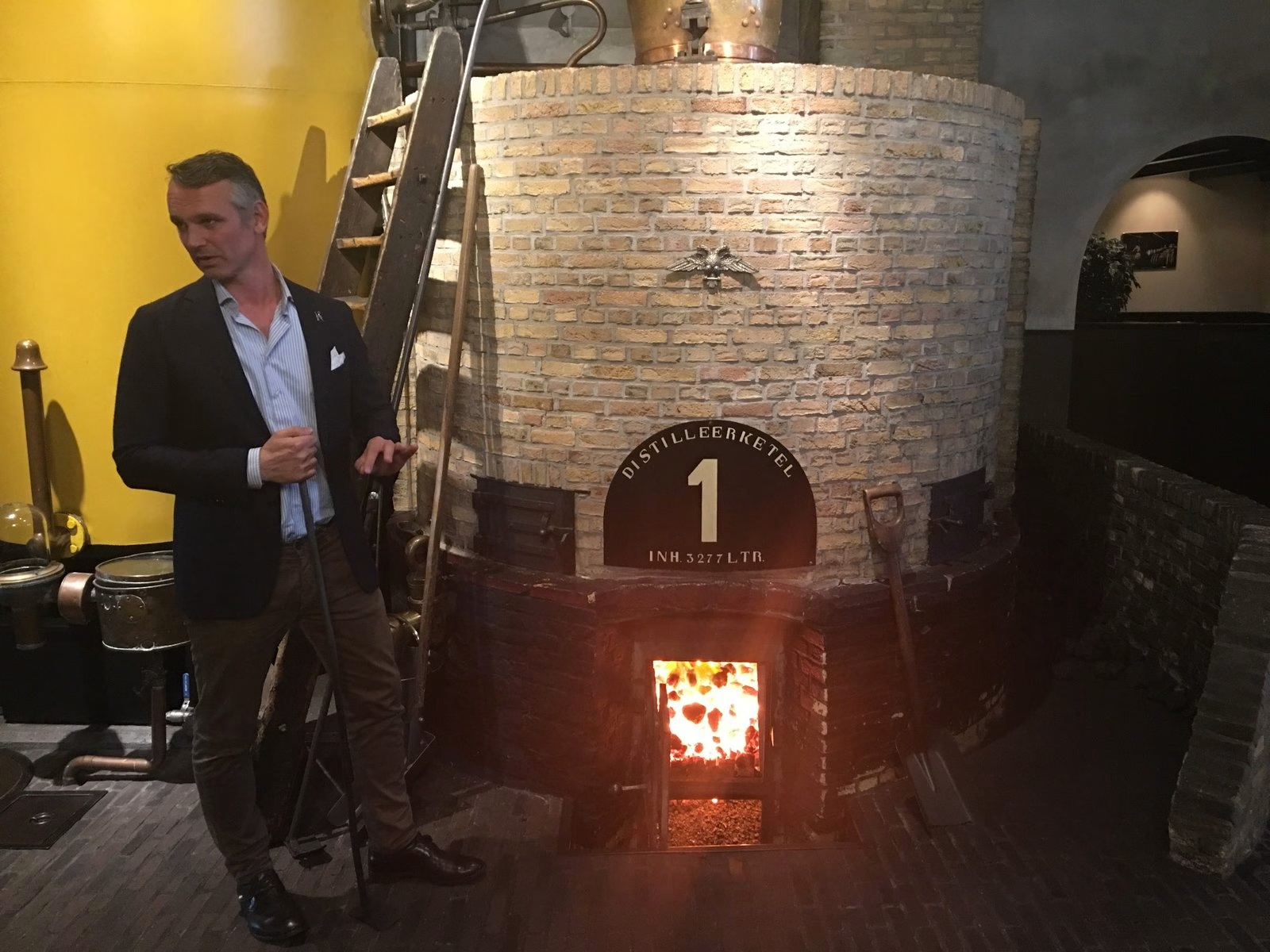
The name comes from Distilleerketel No. 1, the distillery’s historic coal-fired copper pot still. An illustration of the still appears on the Ketel One bottle.
Ketel One developed a following among bartenders, particularly those making classic vodka cocktails. The family’s emphasis on consistency and a distinctive house style helped establish the brand in the premium vodka category.
In 2008, the Nolet family entered into a partnership with Diageo covering Ketel One’s global marketing, sales and distribution. The family retained ownership of its historic distillery in Schiedam.
What began as a Dutch jenever business became an internationally recognized vodka brand, still produced in the city where the Nolet story began.
The Remarkable Ketel One Windmill
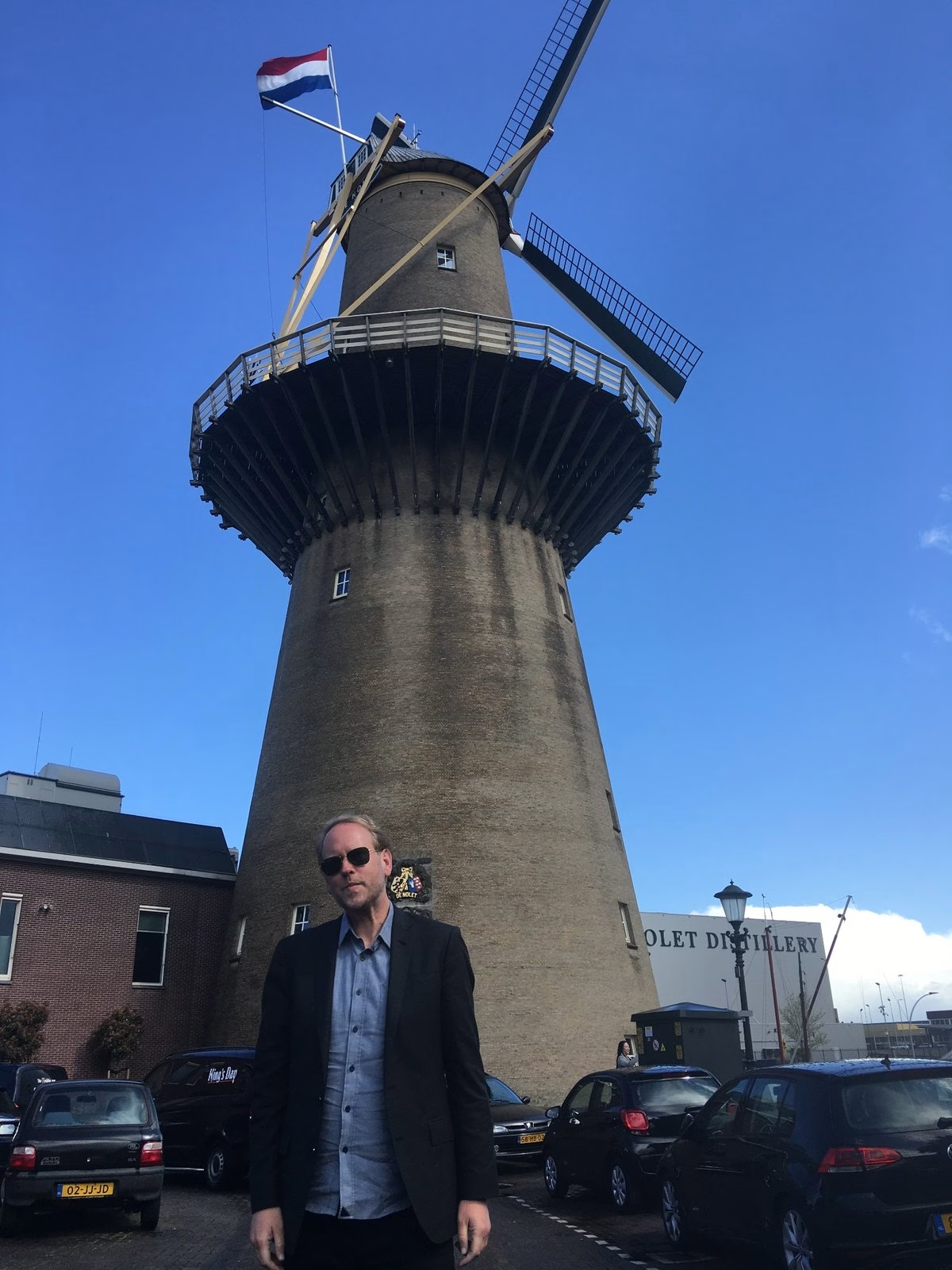
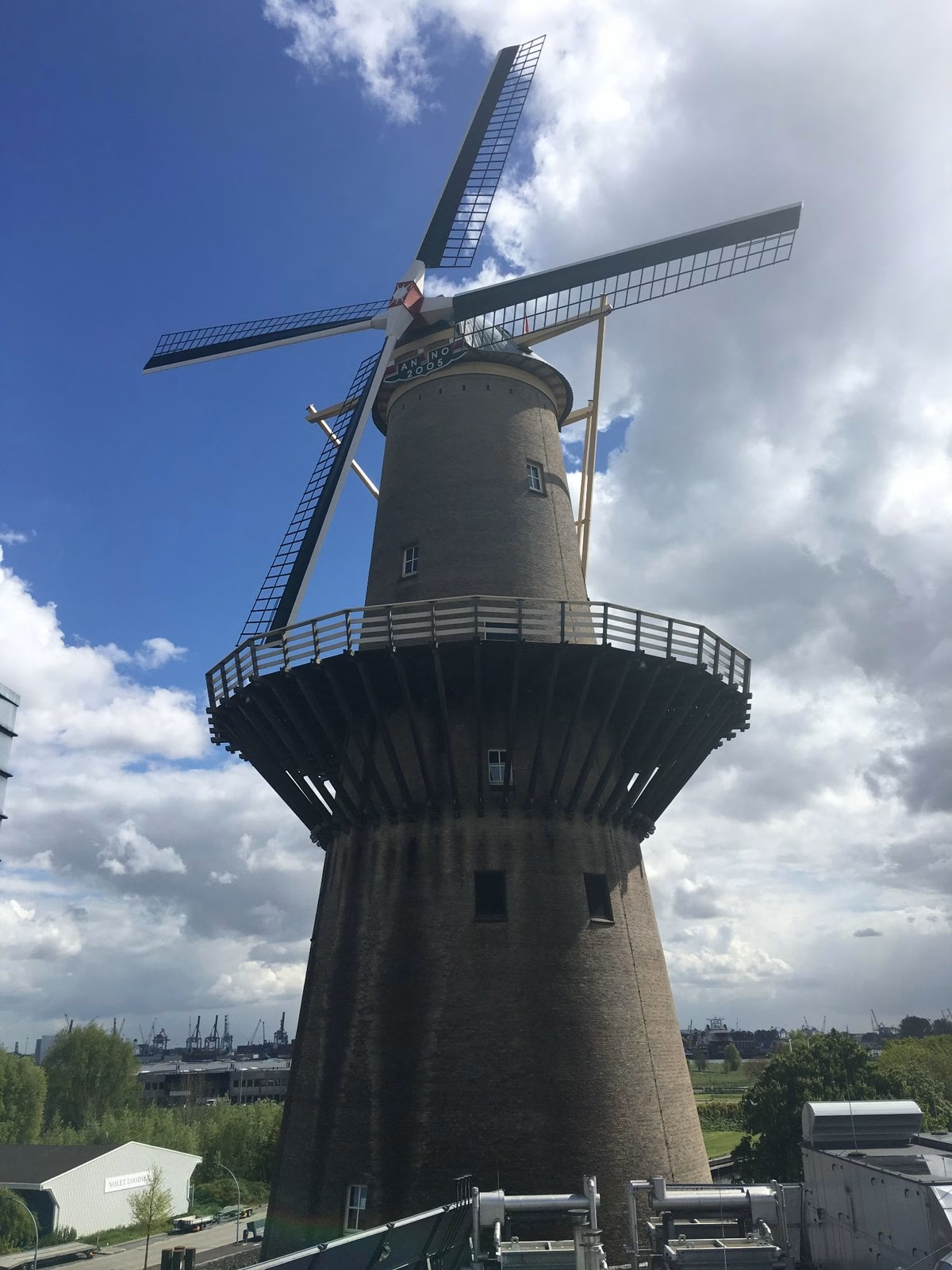
One of the most impressive sights at the distillery is Molen De Nolet, an enormous windmill commissioned by the family in 2005.
Standing approximately 43 meters tall, it is recognized as the world’s tallest tower windmill.
From the outside, the building resembles the historic windmills that once dominated Schiedam’s skyline. Inside, however, is some surprisingly sophisticated technology.
Unlike traditional Dutch grain mills, Molen De Nolet generates electricity. It also houses reception rooms, a theater and meeting spaces used by the distillery.
Our tour began inside the beautiful windmill, where we learned about the Nolet family’s history before exploring the production facilities.
The windmill offers views across Schiedam, the Nieuwe Maas River and the Rotterdam skyline. It’s an extraordinary combination of traditional Dutch architecture and modern engineering.
The family’s investment in the property extends underground as well. An 85-meter private tunnel runs beneath the Buitenhaven, connecting the distillery with its logistics facilities.
Behind the Scenes: How Ketel One Vodka Is Made
The production process is one of the most interesting parts of a visit to the Nolet Distillery.
Ketel One begins with wheat, which provides the grain base for the vodka. Modern column distillation produces a highly refined spirit, while traditional copper pot distillation contributes to the finished vodka’s character.
Copper has long been valued in spirits production because it helps remove certain unwanted sulfur compounds during distillation.
At Nolet, the combination of traditional equipment and modern technology is central to the Ketel One production process.
The historic coal-fired Distilleerketel No. 1 remains an important part of the family’s heritage. Seeing the still up close connects the vodka to the generations of distillers who worked here before Ketel One became an international name.
The distillery also maintains an unusual family tradition: according to Ketel One, every batch of vodka is personally approved by a member of the Nolet family before bottling.
During our visit, the contrast between generations-old equipment and contemporary machinery was particularly striking. This is a working distillery that has continually evolved while remaining in the same family’s hands.
Meeting Carolus Nolet, the Man Behind Ketel One
One of the highlights of Pursuitist’s visit was meeting Carolus Nolet Sr., the tenth-generation distiller responsible for creating Ketel One Vodka.
When he introduced Ketel One in 1983, the Nolet family already had nearly three centuries of distilling experience. His decision to enter the premium vodka market helped bring the company’s Dutch craftsmanship to an international audience.
Our visit also included a conversation with Nolet distillery ambassador Dennis Tamse, who explained the importance of texture, balance and flavor when tasting vodka.
Tamse memorably described the harsh alcoholic sensation of some competing vodkas as a “Mike Tyson punch,” the kind of aggressive intensity that can be mistaken for flavor.
Ketel One, he explained, was designed to be subtler, delivering a gentle sensation on the palate without overwhelming the drinker.
His colorful comparison made an impression. It also provided a useful perspective before our tasting.
The Ketel One Vodka Tasting
Of course, no visit to a vodka distillery would feel complete without a tasting.
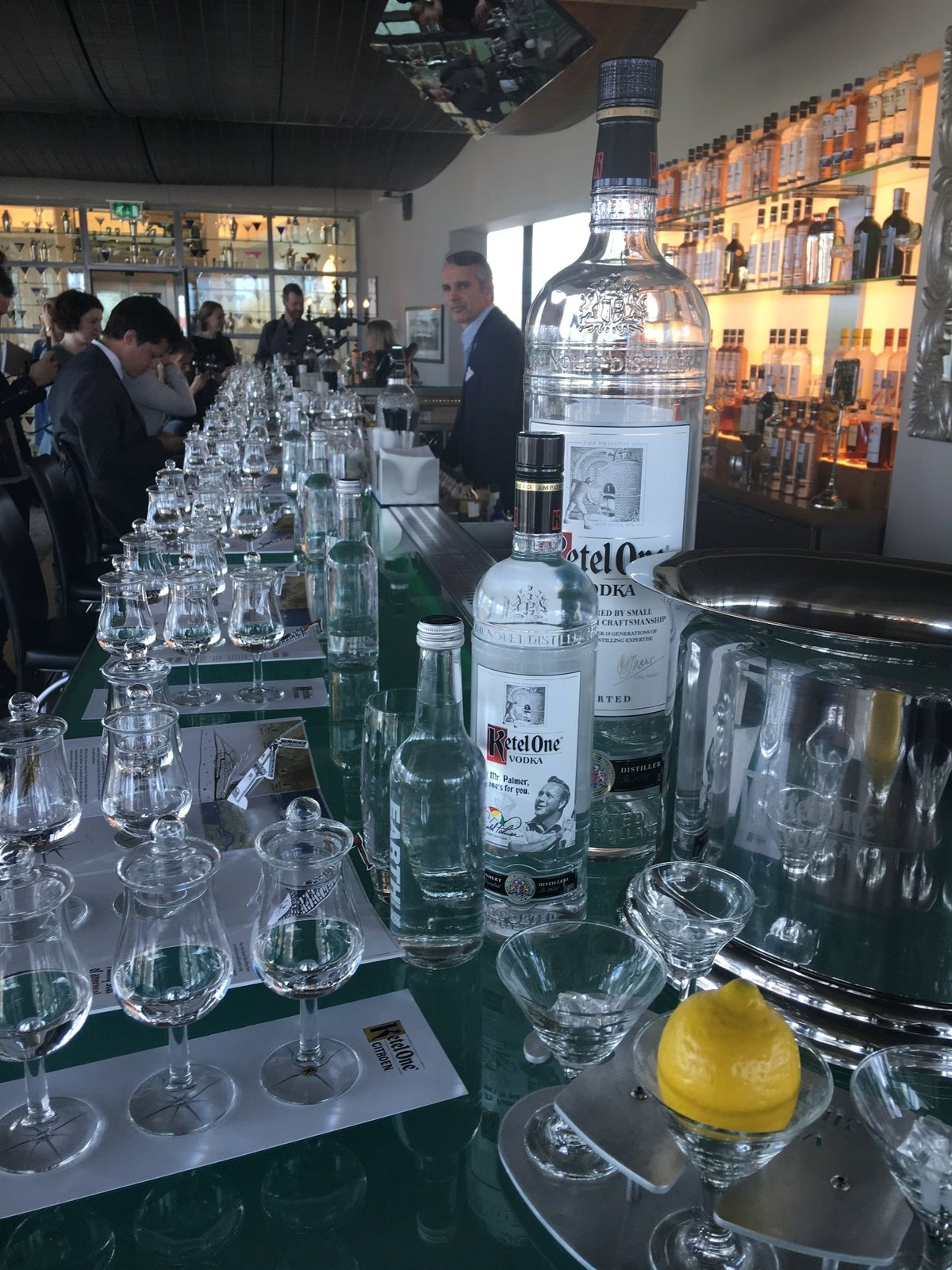
During our hosted visit, Pursuitist participated in a blind tasting comparing Ketel One with other premium vodka brands.
I found Ketel One particularly smooth, crisp and clean, with a finish that stood apart from several of the other spirits.
Tasting vodka without mixers makes differences in texture, aroma and alcoholic intensity easier to appreciate. It’s an interesting exercise, especially when the bottles are concealed.
For cocktail enthusiasts, those distinctions become particularly relevant in a Vodka Martini, where the spirit itself takes center stage.
The tasting was a memorable conclusion to our introduction to the Nolet family’s craftsmanship.
How to Visit the Ketel One Vodka Distillery
The Nolet Family Distillery offers guided tours of its historic production site in Schiedam, making it an appealing excursion for travelers visiting Amsterdam or Rotterdam.
The experience begins inside Molen De Nolet with a short film introducing the family’s history. Visitors then explore selected areas of the working distillery, see the historic Distilleerketel No. 1 and walk through the private tunnel beneath the Buitenhaven.
The approximately two-hour tour concludes with a cocktail, with a nonalcoholic option available.
Ketel One Distillery Tour Information
- Location: Nolet Family Distillery, Schiedam, Netherlands.
- Distillery address: Hoofdstraat 14, 3114 GG Schiedam.
- Tour starting point: Molen De Nolet, Hoofdstraat 6, Schiedam.
- Tour duration: Approximately two hours.
- Availability: Guided distillery tours are generally offered on weekdays by advance reservation.
- Experience: Family history, production facilities, the historic copper still, the windmill, an underground tunnel and a closing cocktail.
- Reservations: Advance booking is recommended. Check current dates, admission prices and visitor requirements before traveling.
Book your visit: See the official Nolet Distillery tour and reservation information.
For visitors interested in a hands-on experience, the distillery also operates the Nolet Copper Club, which offers guided cocktail-making workshops. These sessions are separate from the standard distillery tour and require their own reservations.
Getting to the Ketel One Distillery From Amsterdam
Although Ketel One is closely associated with Dutch heritage and makes an excellent addition to an Amsterdam vacation, the distillery is actually located in Schiedam, just west of Rotterdam.
By train from Amsterdam: Travel from Amsterdam Centraal to Schiedam Centrum. Depending on the service and connections, the journey generally takes around an hour. From the station, continue by local transportation or taxi to the distillery.
By car from Amsterdam: Allow approximately 60 to 90 minutes, depending on traffic. Check parking arrangements before your visit.
From Rotterdam: Schiedam is particularly convenient for visitors staying in Rotterdam. The train journey between Rotterdam Centraal and Schiedam Centrum takes only a few minutes, followed by a local transfer to the distillery.
For travelers based in Amsterdam, I recommend allowing at least half a day for the tour and transportation. A full day gives you time to explore Schiedam as well.
What Else to See in Schiedam
Schiedam is well worth exploring beyond the Nolet Distillery.
The historic city center is filled with canals, old warehouses, traditional Dutch architecture and extraordinary windmills that recall Schiedam’s importance as a center of jenever production.
Its waterways and brick buildings offer a quieter atmosphere than Amsterdam, with reminders of the city’s distilling heritage around nearly every corner.
Visit the National Jenever Museum
The National Jenever Museum explores the Dutch spirit that made Schiedam famous. Located in a historic former distillery, the museum introduces visitors to traditional production methods, the city’s trading history and the role jenever played in Dutch culture.
Discover Schiedam’s Historic Windmills
Schiedam is famous for its unusually tall windmills, which were originally used to grind grain for the local distilling industry.
Several survive today, creating one of the Netherlands’ most distinctive urban landscapes. Combined with a visit to Molen De Nolet, they offer a fascinating look at how the city’s industrial architecture has evolved.
Explore the Dutch Distillers District
Schiedam’s historic distilling district celebrates the city’s longstanding relationship with spirits production. Visitors can explore its canals, museums and tasting rooms, with opportunities to learn about traditional Dutch jenever.
For anyone interested in cocktail history, it’s a rewarding addition to a Ketel One tour.
Celebrating King’s Day With Ketel One in Amsterdam
Our original visit took place during King’s Day, the Netherlands’ annual celebration of the Dutch monarch’s birthday.
Held on April 27, or April 26 when the 27th falls on a Sunday, King’s Day transforms Amsterdam into an enormous orange-colored celebration of street parties, canal festivities, outdoor markets and music.
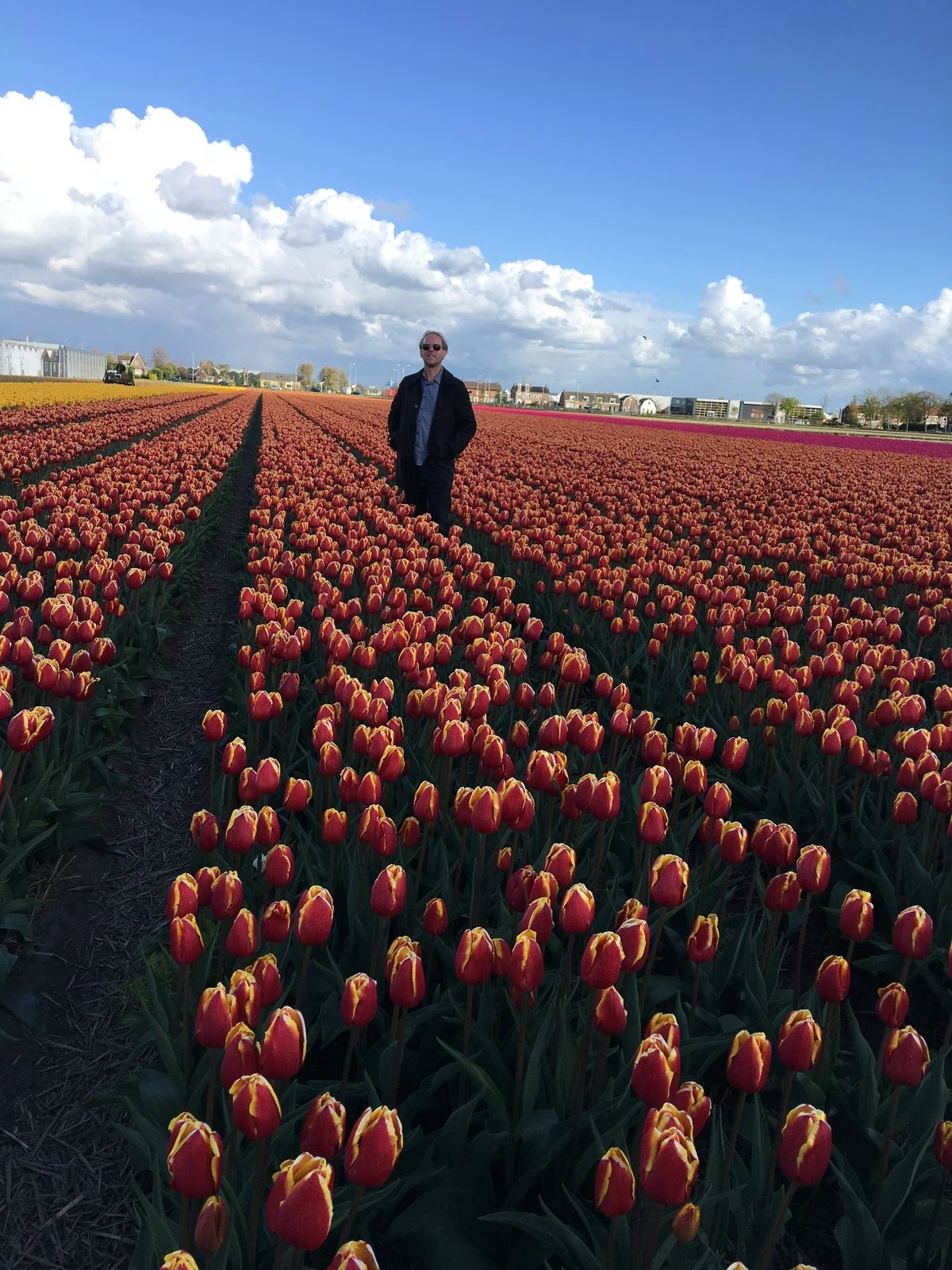
After touring the distillery, we traveled through the Dutch countryside, stopping to admire Holland’s famous spring tulips.
The fields were spectacular, with rows of colorful flowers stretching across the landscape.
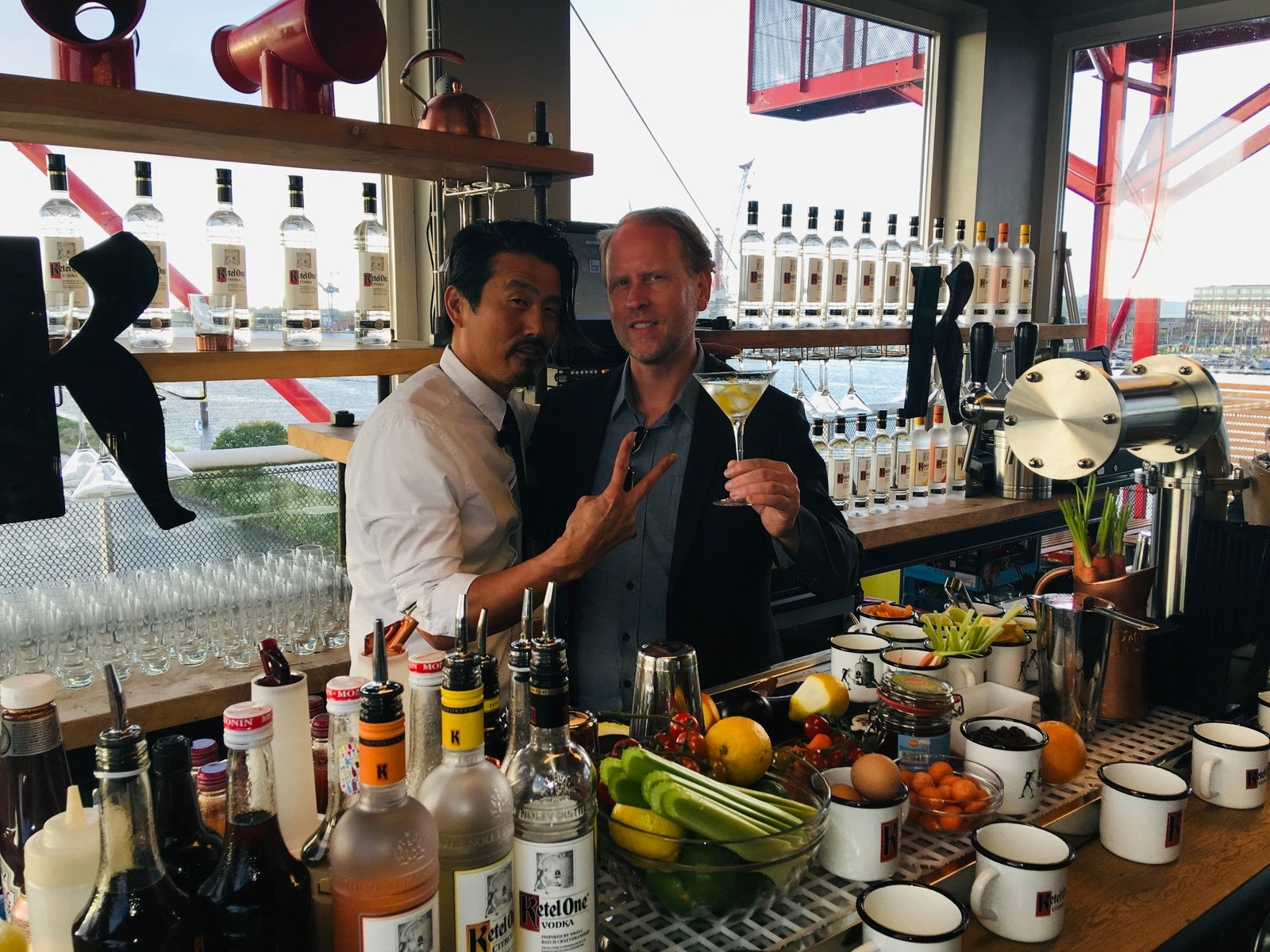
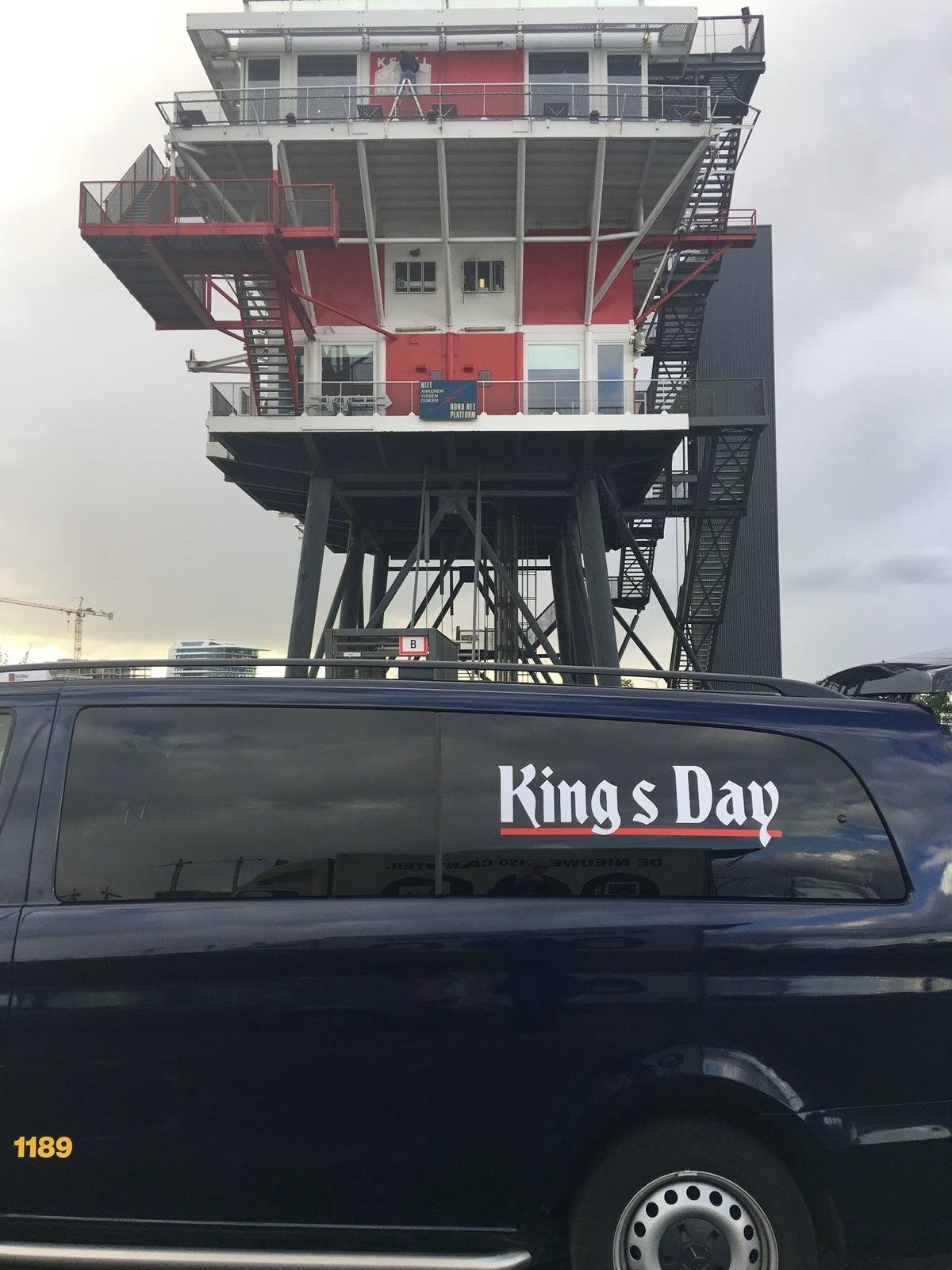
Back in Amsterdam, Ketel One hosted us at a special event inside REM Eiland, a remarkable former offshore broadcasting platform overlooking the city’s harbor.
The industrial structure provided an unforgettable setting for the evening.
We even had our own personal drinks butler preparing cocktails, including a particularly delicious Ketel One Vodka Martini.
It was a wonderful way to conclude a day spent discovering the history and craftsmanship behind one of the Netherlands’ best-known spirits.
Is the Ketel One Distillery Worth Visiting?
For travelers interested in Dutch culture, cocktails and historic craftsmanship, the Nolet Distillery is an excellent excursion from Amsterdam or Rotterdam.
Schiedam’s distilling history is fascinating in its own right, and the Nolet family’s story stretches across eleven generations. The chance to explore a working distillery, see historic copper equipment and step inside the remarkable Molen De Nolet makes the experience particularly memorable.
Our hosted visit offered a wonderful look behind the scenes, including the opportunity to meet Carolus Nolet and learn about the family’s approach to vodka production.
With guided tours available to visitors, the distillery is an appealing addition to a Netherlands itinerary, particularly for anyone who appreciates a well-made Martini.
Pursuitist Tip
Make Schiedam a half-day excursion from Rotterdam or a full-day trip from Amsterdam. Reserve the distillery tour first, then leave time to explore the city’s canals, windmills and jenever heritage. Spring is an especially beautiful time to visit the Netherlands, when the surrounding countryside comes alive with tulips and Amsterdam prepares for King’s Day.
Disclosure: Pursuitist visited the Nolet Distillery as an invited guest of Ketel One during a hosted King’s Day trip. The personal experiences and tasting impressions described here come from that visit. Visitor information, tour availability and admission policies may change.